Flip the Narrative
- Gopika Kapoor
- Mar 28
- 2 min read
As I walked into a friend's home for dinner last night, the hot topic of discussion was a video showing a man (a British national) wearing shorts, walking into a bar at a Mumbai club, and on being told that shorts are not allowed, removing his belt and stripping down to his underwear. This screengrab from the CCTV camera was setting WhatsApp on fire and causing reactions ranging from outrage, disgust and anger. I confess, this is how I felt too. ‘What cheek!,’ I said to the friend after she showed me the video, ‘Who does he think he is?’
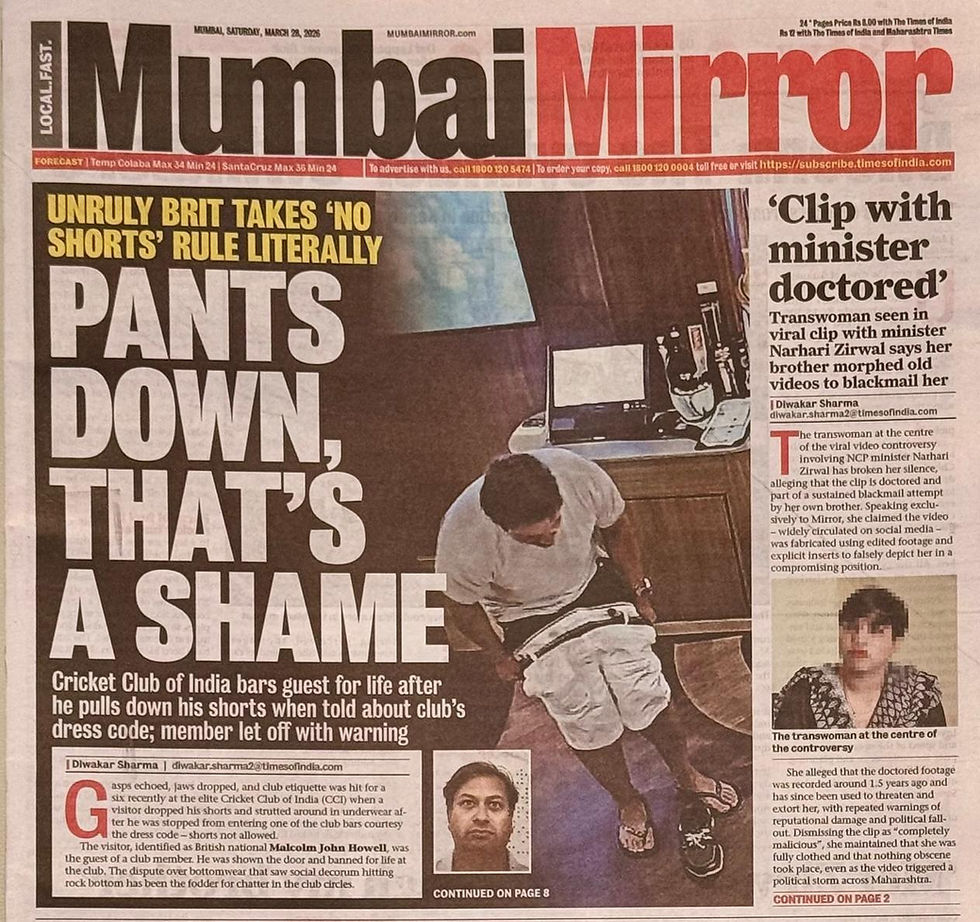
Driving home, my belly full from a delicious Parsi dinner, it suddenly struck me - what if the man was on the autism spectrum? What if he was told that shorts weren't allowed, and being autistic, took this literally as many autistic individuals do, and decided to strip them off, thereby doing away with the problem. I could imagine his mental state: faced with a social situation, which is stressful for most autistic people, entering an unfamiliar place, in an unfamiliar country, and suddenly being accosted with a new rule, one he may not have expected. ‘When people on the spectrum experience stress’, I remember my mentor and teacher Dolores Scheelen telling me, ‘their ability to think and express themselves rationally starts narrowing down.’
I remember talking with numerous parents, who reported incidents of their children taking what they said literally, causing laughter and amusement at times, but also frustration and anger at others. And I also remember, many, many times when my son Vir had taken what I said so literally and caused a series of misunderstood events, that only my family had been able to understand - because we knew and understood him and how his brain works.
In a split second, my thoughts on this man changed from anger and outrage to compassion, understanding and empathy for what he might have gone through (incidentally, it has now emerged that the man is, in fact, on the autism spectrum). Reading this, I'm sure your perspective has changed as well. That's the funny thing about life - our first reaction, based on anything other than the norm, is usually one of judgement, usually negative. But when we look deeper, we often flip our narrative.
As World Autism Awareness Month draws nearer, this is what I would urge you to do - flip the narrative on what you know about people with autism and other disabilities - their potential, their challenges, their hopes and dreams. You might just see things through a perspective that you may not have considered before.

Comments